
Finding water in your basement is more than just a nuisance; it’s a potential threat to your home’s structure, air quality, and your family’s health. From damaging your foundation to encouraging mold growth, basement water issues can escalate quickly if not addressed correctly.
This guide will help Tulsa homeowners understand why basement water problems happen, how to fix minor issues safely, and when to bring in a professional for serious concerns. Whether you’re dealing with occasional damp spots or a full-on flooded basement, knowing the cause and the best response, including when to call for expert plumbing services in Tulsa, OK, can save you time, money, and future headaches.
Why Water in the Basement Is a Big Deal
Spotting water in your basement might seem like a small issue at first, but it can quickly become a serious threat to your home’s safety and value. Even minor dampness can lead to warped flooring, ruined drywall, damaged insulation, and the loss of personal belongings stored below ground level.
Worse, trapped moisture creates the perfect environment for mold and mildew, which can affect indoor air quality and pose health risks, especially for those with allergies or respiratory issues.
In Tulsa, water in the basement is a common homeowner headache due to a mix of local conditions:
- Heavy seasonal rainstorms that overwhelm standard drainage systems
- Clay-rich Oklahoma soil that expands when wet and contracts when dry, increasing pressure on foundation walls
- Aging sump pumps or outdated plumbing setups
- Improperly sloped yards or gutter systems that direct water toward the home rather than away from it
Whether you’re dealing with a trickle, a puddle, or standing water, understanding why the water is entering your basement is the first, and most important, step to stopping it for good. In severe cases, immediate response through emergency services may be necessary to prevent further damage and begin the cleanup process promptly. Identifying the source helps you choose the right fix and avoid recurring problems.
Common Causes of Water in the Basement
If you’ve noticed moisture or standing water in your basement, the problem could be coming from more than one source. Understanding what’s triggering the issue is key to choosing the right fix and avoiding repeat flooding. Here are the most common causes of water in the basement problems in Tulsa homes:
Poor Drainage Around the Foundation
When the ground slopes toward your home instead of away from it, rainwater has nowhere to go but down into your foundation. Combine that with short or disconnected downspouts and compacted soil, and you’ve got a recipe for water pooling near or in your basement. Proper grading and drainage are essential to prevent this type of infiltration.
Foundation Cracks or Leaks
Oklahoma’s clay-heavy soil expands and contracts with moisture changes, creating pressure against your foundation walls. This force, known as hydrostatic pressure, can push water through even tiny cracks or porous concrete. Over time, these small leaks can worsen and allow water to seep into your basement through walls or floors.
Sump Pump Failure or Overflow
Sump pumps are your home’s last line of defense during storms and periods of heavy rain. However, old equipment, power outages, or clogged discharge lines can cause sump pumps to fail or overflow just when you need them most, resulting in a flooded basement with little warning.
Plumbing Leaks or Sewer Line Backups
Water heaters, burst pipes, or clogged sewer lines can all release large amounts of water into your basement in a short time. Slow‑draining sinks and toilets may signal a deeper clog, which can require professional services like Hydro Jetting to completely clear blockages.
Roof or Gutter Issues
Damaged shingles, overflowing gutters, or downspouts that don’t move water far enough from your home’s base can all contribute to excess water near the foundation. When water pours directly down foundation walls, it increases moisture pressures and can lead to leaks or seepage.
By identifying the exact cause, you can take more effective action to fix water in the basement issues before they cause serious damage and structural concerns.
Fix Water in Basement
DIY Tips to Fix Water in Basement Before It Becomes a Big Problem
Not every water issue in your basement means calling in the pros immediately. If the signs are minor and manageable, there are a few cost-effective steps you can take to reduce moisture and protect your home.
1. Clean Gutters and Extend Downspouts
Clogged gutters are one of the most overlooked causes of basement water problems. Make sure gutters are free of leaves, mud, and debris, especially in the fall and spring. Then, ensure your downspouts extend at least 6 feet away from your foundation to carry water safely away.
2. Regrade the Soil Around Your Home
If the ground around your house slopes inward, water will naturally flow toward your basement. Use a shovel and soil to grade the landscape so it slopes away from your home by about 6 inches over 10 feet. This simple fix can prevent a lot of headaches.
3. Seal Small Foundation Cracks
For hairline cracks, you can apply a waterproof masonry sealant to prevent moisture from seeping in. Just make sure the crack isn’t growing or showing signs of structural damage; those require professional repair.
4. Install a Sump Pump Battery Backup
Power outages during storms are a common reason for sump pump overflow. A battery backup system helps keep your pump running even if the electricity goes out, giving you peace of mind during heavy rain.
⚠️ Important Note:
If your basement continues to get wet after every rain or you notice signs of mold or damp smells, it’s time to call a professional. DIY can help fix water in the basement issues temporarily, but long-term solutions often require expert evaluation and waterproofing.
Water Removal
Why Professional Water Removal Matters for Flooded Basements
When water makes its way into your basement, timing is everything. Waiting too long to act, even just a day or two, can lead to significant damage to your home’s foundation, air quality, and structure.
Clear Signs of Major Water Damage
If you notice any of the following, it’s time to call a professional:
- Persistent dampness or pooling water that doesn’t dry out
- Musty odors or the appearance of mold or mildew
- Foundation cracks that appear to be widening
- Stained or bowed basement walls that suggest structural stress
These aren’t just cosmetic issues. They point to deep-rooted problems that can worsen quickly if left untreated.
Why Professional Flooded Basement Cleanup Works
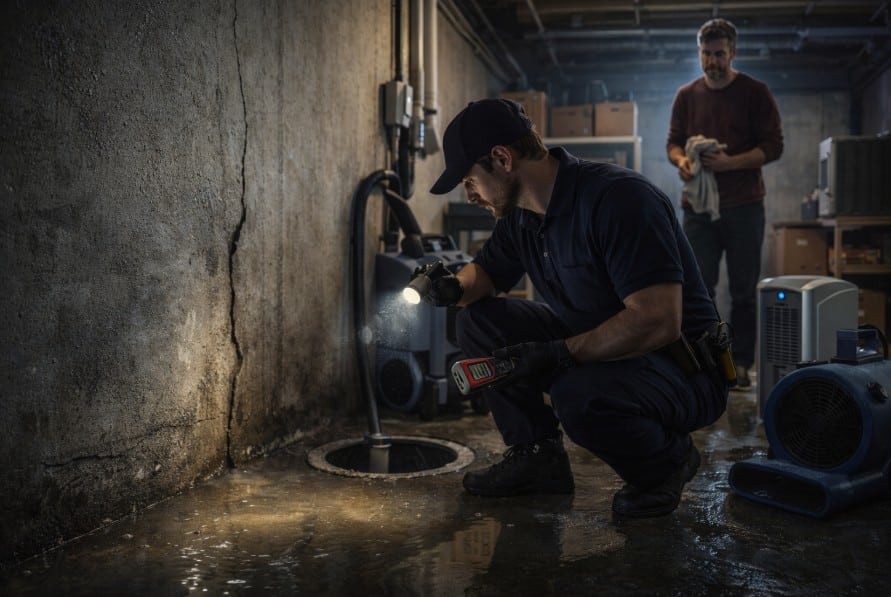
If your basement has more than just a puddle, professional flooded basement cleanup ensures fast and thorough water removal to minimize long-term damage. Licensed pros use advanced tools that go beyond what homeowners typically have, including:
- High-capacity pumps to remove standing water
- Industrial-grade dehumidifiers and air movers to dry out walls and floors
- Moisture detection meters to find hidden damp spots inside drywall or insulation
Removing the visible water is just step one, professionals also focus on preventing mold, sanitizing affected areas, and protecting your foundation.
Waterproofing & Drainage Solutions
Once the water is removed, your contractor may recommend:
- French drains or curtain drains to improve exterior drainage
- Interior waterproofing systems with sump pumps and vapor barriers
- Exterior sealing to block future moisture from entering the foundation walls
Here’s how DIY and professional solutions compare:
| DIY Fix | Professional Solution |
| Temporary crack sealant | Permanent foundation sealing |
| Gutter/downspout extension | Full perimeter drainage systems |
| Shop-vac or mop | Commercial-grade extraction and drying |
If your flooding involves contaminated water or sewer backup, professional Backflow Prevention services are essential to protect your health and restore safe conditions in your home.
For reliable basement water removal in Tulsa, trust us to handle the job thoroughly and quickly, before small problems become expensive ones.
Flooded Basement Cleanup
Flooded Basement Cleanup Tips and the Long-Term Fixes That Follow
Cleaning up after a flooded basement is just the first step. Without addressing the root cause, the problem is likely to come back, sometimes worse than before. Once the water is removed and your space is safe, it’s time to think about prevention.
Here are key long-term strategies to help ensure your basement stays dry, even when Tulsa weather doesn’t cooperate:
Waterproofing Your Basement
To keep moisture out for good, consider both interior and exterior waterproofing methods:
- Interior sealants are applied to basement walls and floors to block minor seepage. These are helpful for small cracks or porous concrete, but are best used as a supplement.
- Exterior waterproofing is more comprehensive. It involves sealing the outer foundation walls and installing protective membranes or coatings to stop water before it enters your home, a must for homes with recurring leaks or foundation cracks.
Roof and Gutter Maintenance
Your roof and gutter system play a huge role in keeping water away from your basement. Routine inspections and cleanouts help prevent:
- Overflowing gutters that dump water near your foundation
- Roof leaks that drip into wall cavities or basements
- Ice dams or blockages that cause water to pool near your home
Pro tip: Downspouts should extend at least 6 feet away from your house to direct water safely away.
Drainage System Upgrades
If your yard tends to collect water or slope toward your home, you may need:
- French drains or curtain drains to redirect groundwater
- Regrading the soil to slope away from your foundation
- Dry wells or catch basins to handle storm runoff efficiently
In some cases, hidden blockages or clogs in your underground drains may require professional drain cleaning to restore proper water flow and prevent backup into your basement.
Plumbing and Remodel Considerations
If you’re remodeling a flood-damaged space, it’s the perfect time to plan ahead. Services like Bathroom Remodels can include upgraded fixtures, better drainage layouts, and plumbing improvements to minimize the risk of future leaks or water buildup.
For peace of mind and long-term protection, work with experts who understand local soil, weather, and building codes. We offer tailored solutions to help Tulsa homeowners stop basement flooding at its source, before it happens again.
Final Thoughts: Stop Basement Water Before It Gets Worse
Even a small amount of water in the basement can signal a larger problem. Moisture may start as a trickle, but it can quickly escalate into mold growth, structural damage, and costly repairs if ignored. What seems like a minor inconvenience today could become a major financial and health issue down the road.
While DIY fixes like extending downspouts or sealing small cracks can help temporarily, repeated flooding or moisture buildup is a clear sign that your home needs expert attention.
If you’re noticing any signs of basement water intrusion in your Tulsa home, whether it’s damp walls, musty smells, or visible pooling, don’t wait for it to get worse. The team at Maston’s Plumbing and Drain is here to help with fast, effective water removal and proven drainage solutions.
From identifying the cause to implementing long-term waterproofing strategies, we’ll make sure your home stays dry, safe, and protected no matter the season.
Contact us today to schedule your flooded basement assessment and take the first step toward lasting peace of mind.
FAQs: Water in Basement Issues in Tulsa
What causes water in the basement after heavy rain?
When Tulsa experiences heavy or prolonged rainfall, the ground around your home can become oversaturated. As water builds up in the soil, pressure increases around your foundation walls (called hydrostatic pressure), which can force water through cracks, gaps, or porous concrete. Poor drainage and improper grading often make the problem worse.
How do I fix water in the basement without a sump pump?
If you don’t have a sump pump, start with the basics: extend your downspouts, regrade the soil away from your foundation, and seal any small cracks with waterproof masonry sealant. For added protection, consider installing a French drain or waterproofing system. However, persistent moisture issues often require professional solutions, especially if your home is in a low-lying area.
Is basement water damage covered by homeowners’ insurance?
It depends on the source of the water. Most policies do not cover flooding caused by storms or rising groundwater unless you have separate flood insurance. However, sudden and accidental damage from plumbing leaks (such as burst pipes or water heater failures) may be covered. Review your specific policy or speak with your insurer to understand your coverage.
Can I handle the flooded basement cleanup myself?
If it’s a minor water incident, like a small leak or spill, you can likely manage it with towels, fans, and a wet-dry vacuum. But if there’s standing water or signs of mold, it’s safer and more effective to call in professionals. They use commercial-grade water removal tools, drying systems, and moisture meters to ensure the space is completely restored.
What does professional water removal cost?
Costs vary depending on the extent of water damage, cleanup needs, and whether mold remediation or structural repairs are required. On average, water removal services can range from $1,000 to $4,000+, but acting quickly often reduces the overall cost. Many companies offer free estimates, so it’s worth calling early.