Dive into the funniest plumbing fails homeowners have made, from overflowing toilets to DIY disasters, each with a lesson on maintenance, safety, and when to call a pro. Laugh while learning practical plumbing tips, common mistakes to avoid, and why experienced plumbers like Maston’s Plumbing and Drain can save the day.
Plumbing mishaps can range from mild annoyances to full‑blown disasters, but many turn into unforgettable stories that homeowners can laugh about after the mess is cleaned up. From mismeasured pipes to flooded bathrooms, these funny plumbing failures not only make great stories but also teach valuable lessons about maintaining your home’s plumbing system and knowing when to call an expert.
Whether you’re tackling minor upkeep or just curious about what not to do, this listicle unpacks real‑world examples with practical takeaways. And if any of these mishaps sound familiar, don’t hesitate to contact us for professional plumbing services in Tulsa, OK!
Plumbing Fail
Why Plumbing Fails Happen
Before diving into some of the funniest plumbing mishaps, it’s important to understand why these issues happen. Recognizing the common causes of plumbing failures can help you avoid costly damage, save time, and even prevent stressful emergencies.
Many plumbing problems stem from everyday mistakes, aging infrastructure, or simple misunderstandings. Here are the most frequent reasons homeowners experience plumbing failures:
- DIY errors or shortcuts: Tackling a plumbing project without the right knowledge or tools can backfire quickly. Even something as simple as tightening a fitting incorrectly or using the wrong type of pipe can cause leaks or flooding. While DIY projects can save money in small cases, attempting complicated repairs without guidance often leads to bigger, more expensive problems.
- Ignored routine maintenance: Plumbing systems require regular inspections and upkeep, from checking for small leaks to cleaning drains. Skipping maintenance allows minor issues, like a slow leak or a partially clogged pipe, to escalate into serious damage. Lack of maintenance is frequently the root cause of plumbing problems, and early detection can stop issues before they become costly disasters.
- Misunderstanding plumbing tools or instructions: Modern plumbing systems and materials can be confusing. Using the wrong tools, misreading installation instructions, or mixing incompatible materials can result in leaks, blockages, or even structural water damage.
- Improper installation and sealing: Mistakes during installation, such as poorly sealed connections, crooked pipe fittings, or incorrectly installed valves, are a leading cause of early plumbing failures. Even a small misalignment can lead to dripping, mold, or corrosion over time.
- Lack of professional expertise: Plumbing involves precise knowledge of water pressure, pipe materials, and building codes. Attempting to “figure it out” without proper training can unintentionally create safety hazards or code violations. Experienced plumbers can quickly identify issues, apply the correct solutions, and ensure everything meets safety standards.
Understanding these common causes not only explains why plumbing fails to happen but also shows the value of preventive care and professional assistance. By addressing small problems early and knowing when to call an expert, homeowners can avoid the mess and the expense of a full-blown plumbing disaster.
Top 10 Funny Plumbing Fails (and What They Teach Us)
Each of the following examples blends humor with a practical takeaway you can apply in your own home.
1. Toilet Overflow Catastrophe
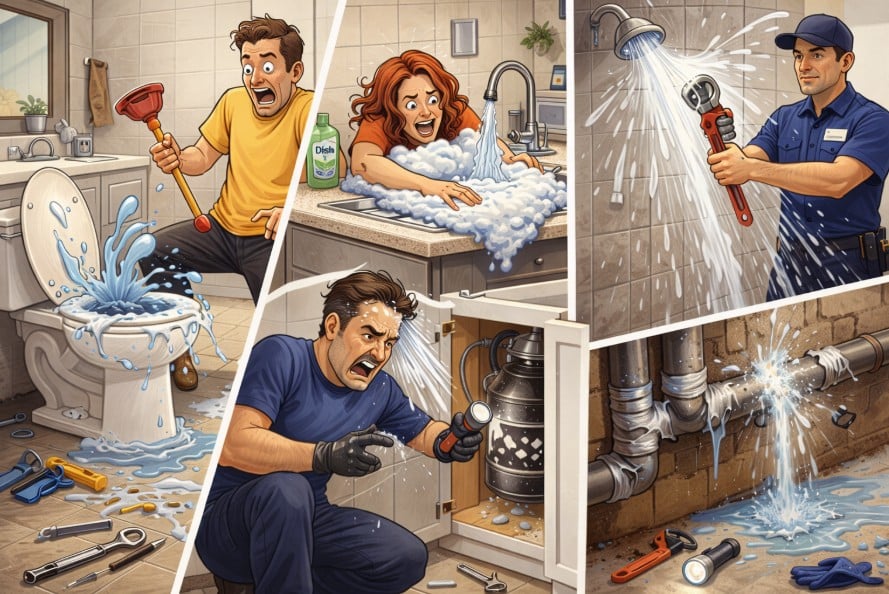
A classic: a homeowner attempted to fix a slow‑flushing toilet and ended up with a geyser of water cascading over the bathroom floor. Lesson? Before you start disconnecting fixtures, shut off the water supply and know where the main valve is. Professionals can handle these delicate fixes safely, especially during planned projects like bathroom remodels, where plumbing upgrades are often involved.
2. DIY Sink Installation Gone Wrong
One homeowner proudly installed a new sink only to discover it drained in reverse because the P‑trap was installed backwards. This plumbing fail highlights how crucial correct assembly and alignment are for even simple fixtures.
3. Showerhead Showdown
Without turning off the water, a homeowner began removing an old showerhead, only to unleash a powerful spray worthy of a car wash. Always shut off local water supplies before working on plumbing; it prevents surprises and water damage. This is especially important during planned projects like shower installation, where water connections are being upgraded or replaced.
4. Chemical Reaction Gone Wild
Using harsh chemical drain cleaners might seem like a quick fix, but too much can damage pipes and create dangerous reactions. Experts recommend natural methods like baking soda and vinegar, or better yet, let a pro handle stubborn clogs.
5. Pipe Freezing Fiasco
In colder weather, uninsulated pipes can freeze and burst, flooding basements and walls. Safe plumbing preparedness means insulating pipes and planning for seasonal changes, and if everything freezes, call in professionals before your next winter fails.
6. Backyard Hose Disaster
A garden hose accidentally left running indoors becomes an impromptu fountain. Lesson? Always secure outdoor hoses and never run an indoor appliance or hose unattended.
7. Misguided Pipe Repair With Duct Tape
Some DIYers swear by duct tape. Unfortunately, it’s not a substitute for proper sealing or professional pipe repair. If you see leaks, let trained plumbers address the root cause.
8. Laundry Room Flooding
Improperly connected washer hoses can spring leaks that flood laundry rooms quickly. Secure connections and periodic inspections help avoid this kind of plumbing failure.
9. Soap Explosion Under the Sink
Believe it or not, mixing soaps and chemicals under the sink produced a foamy eruption. Know what should (and should not) go down your drain to avoid messy mishaps, or call specialists for safe drainage solutions.
10. Kitchen Sink Overflow
Sending grease, fibrous food, or coffee grounds down the sink can cause backups so dramatic they rival water parks. Use strainers and proper disposal habits, and for deep clogs, trust experts rather than risky DIY fixes.
Lessons Homeowners Should Learn from These Fails
| Fail Type | Cause | Lesson | Prevention |
| Overflowing Toilet | Attempting a fix without shutting off water | Always turn off the water supply before any repairs to prevent flooding and water damage. | Know where your main and local shutoff valves are and label them for quick access in emergencies. |
| Backwards P‑trap | Incorrect installation | Understanding how each plumbing part functions can save you from leaks and drainage problems. | When installing sinks or fixtures, follow instructions carefully or hire a professional plumber to ensure proper setup. |
| Frozen Pipes | Exposure to cold temperatures | Frozen pipes can burst, leading to extensive water damage. Planning ahead can prevent costly repairs. | Insulate pipes, especially in basements or exterior walls, and drain outdoor faucets before winter. Schedule a seasonal check-up with a plumber. |
| Chemical Damage | Use of harsh drain cleaners or chemicals | Overusing corrosive products can weaken pipes and cause leaks or dangerous reactions. | Use natural cleaning alternatives, like baking soda and vinegar, or rely on a plumber for persistent clogs. Avoid pouring chemicals down drains regularly. |
| Laundry Room Flooding | Loose or worn hose connections | Regularly check hoses and connections to prevent sudden floods that ruin floors and walls. | Replace old or cracked hoses and tighten connections. Consider installing a leak detection system for early warning. |
| Soap or Grease Overflow | Improper disposal of substances down drains | Even small habits like dumping grease or soap can cause blockages that escalate into major clogs. | Use drain strainers, dispose of grease in the trash, and schedule periodic professional drain cleaning. |
| Misguided DIY Repairs | Temporary fixes like duct tape on pipes | Short-term solutions can quickly fail and make the problem worse. | Always address the root cause of leaks or damage and call a licensed plumber for proper repairs. |
Need Help With Your Plumbing? Contact Maston’s Plumbing & Drain!
Whether you’ve already experienced a plumbing failure or simply want to prevent one, the expert team at we are ready to keep your home safe, functional, and worry-free. With years of experience serving Tulsa homeowners, we provide timely repairs, routine maintenance, and professional installations that save you time, money, and stress.
Don’t wait for a small problem to turn into a costly disaster. Schedule a service or consultation today and let the professionals protect your home and your peace of mind.
Call now to speak with a friendly Maston’s Plumbing expert and get your plumbing running smoothly again!
FAQs About Plumbing Fails
1. What is the most common plumbing failure in homes?
The most frequent plumbing mistakes homeowners make are ignoring small leaks and relying on chemical drain cleaners. Even minor leaks can slowly damage walls, floors, and cabinets, while harsh chemicals can corrode pipes over time, leading to recurring clogs or costly replacements. Regular inspections and professional maintenance can prevent these issues before they escalate.
2. Can DIY plumbing really save money, or does it cause more problems?
DIY plumbing can be cost-effective for very simple tasks like replacing a faucet washer. However, attempting complex repairs without proper knowledge often leads to mistakes that cost more to fix than hiring a professional in the first place. For long-lasting results and to protect your home, it’s best to rely on trained plumbers like us.
3. How do I avoid a plumbing disaster during winter?
Winter brings a high risk of frozen or burst pipes. To protect your home:
- Insulate exposed pipes in basements, attics, or exterior walls.
- Drain outdoor spigots and irrigation lines.
- Schedule professional plumbing checks before freezing temperatures arrive.
Taking these steps early can save thousands in potential water damage.
4. Are there signs that indicate a professional plumber is needed?
Yes. Common warning signs include:
- Slow-draining sinks or tubs
- Water stains on walls or ceilings
- Sudden spikes in water bills
- Strange noises from pipes or fixtures
If you notice any of these, contact a professional promptly to prevent small problems from becoming major repairs.
5. How can leak detection help prevent plumbing failures?
Hidden leaks can quietly waste water and damage your home over time. Professional leak detection services use specialized tools to locate leaks behind walls, under floors, or beneath slabs, often before you even see visible damage. Early detection saves money, reduces stress, and protects your home from costly repairs.
6. What upgrades can help prevent common plumbing issues?
Upgrading your plumbing can reduce the risk of failures and improve water quality. Consider:
- Whole-home water softeners to prevent mineral buildup
- Modern fixtures with reliable seals and valves
- Water filtration systems to protect pipes and appliances from contaminants
These improvements not only prevent problems but also enhance efficiency and convenience.